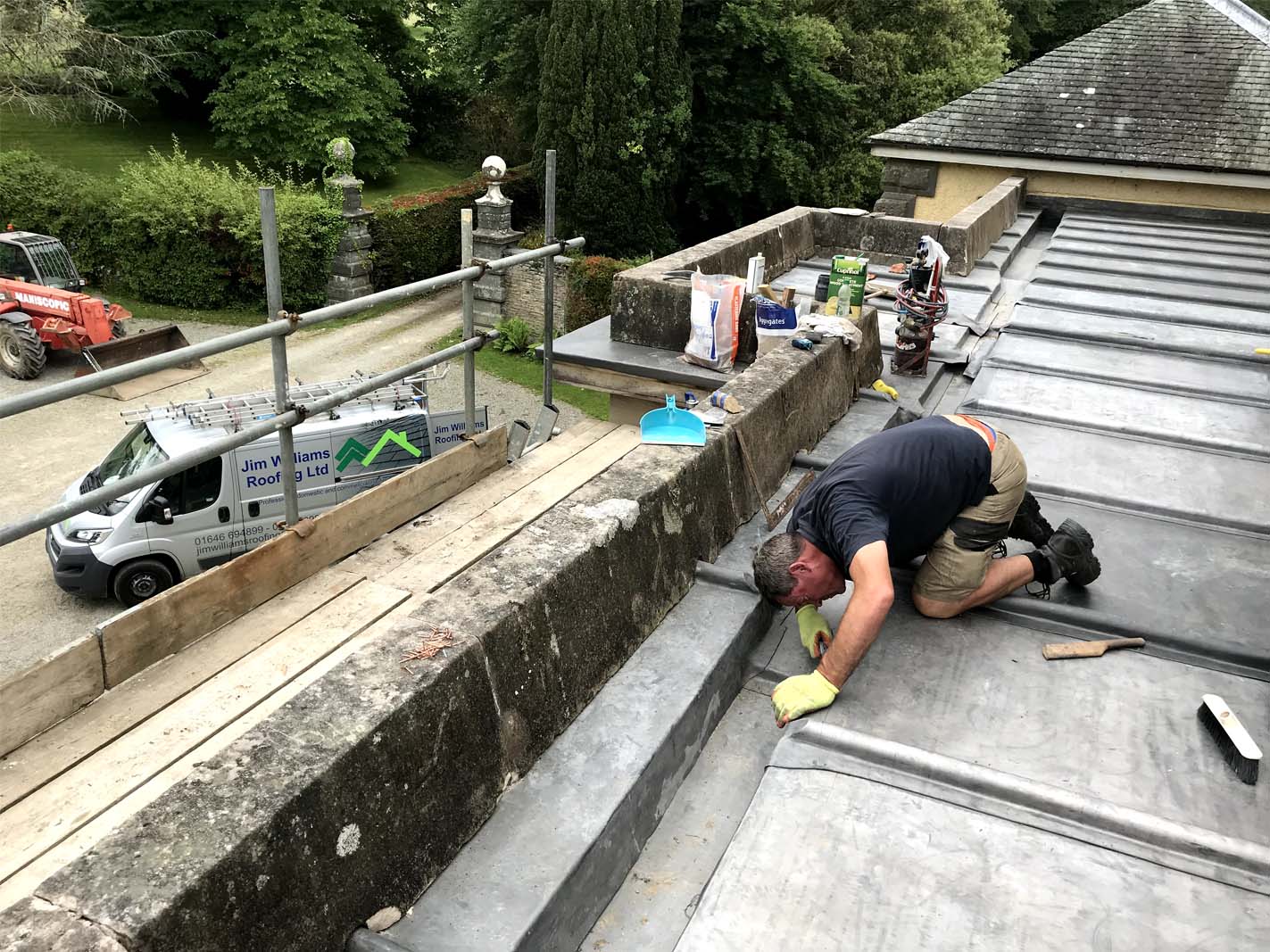
Lead Flashings & Roof Leadwork
for Homes
We handle domestic leadwork, from flashing repairs to full replacements as part of wider roofing projects.
Lead protects junctions and valleys where water is most likely to enter, so accurate detailing is essential to keeping the structure watertight.

Common signs your leadwork needs attention
You may need lead repairs if you’ve noticed:
- Cracks or splits in flashings
- Lifting or loose lead around roof junctions
- Staining on walls or ceilings near chimney breasts
- Persistent leaks around valleys or abutments
Failing leadwork is a common cause of leaks. Problems are often down to age, movement, or poor installation.
We can advise whether a simple repair is enough or if replacement is the best option.
Our leadwork services
Our domestic leadwork services include:
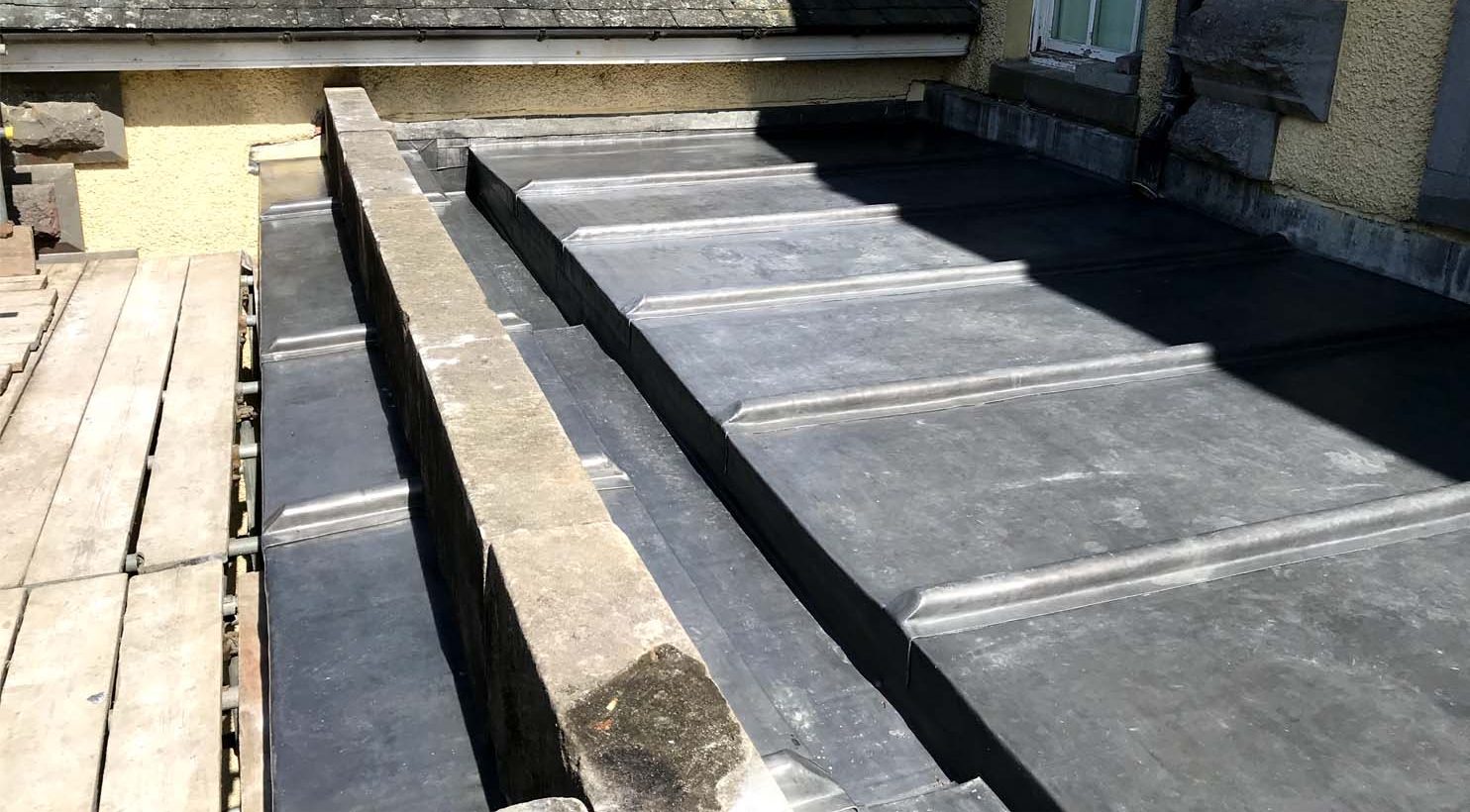
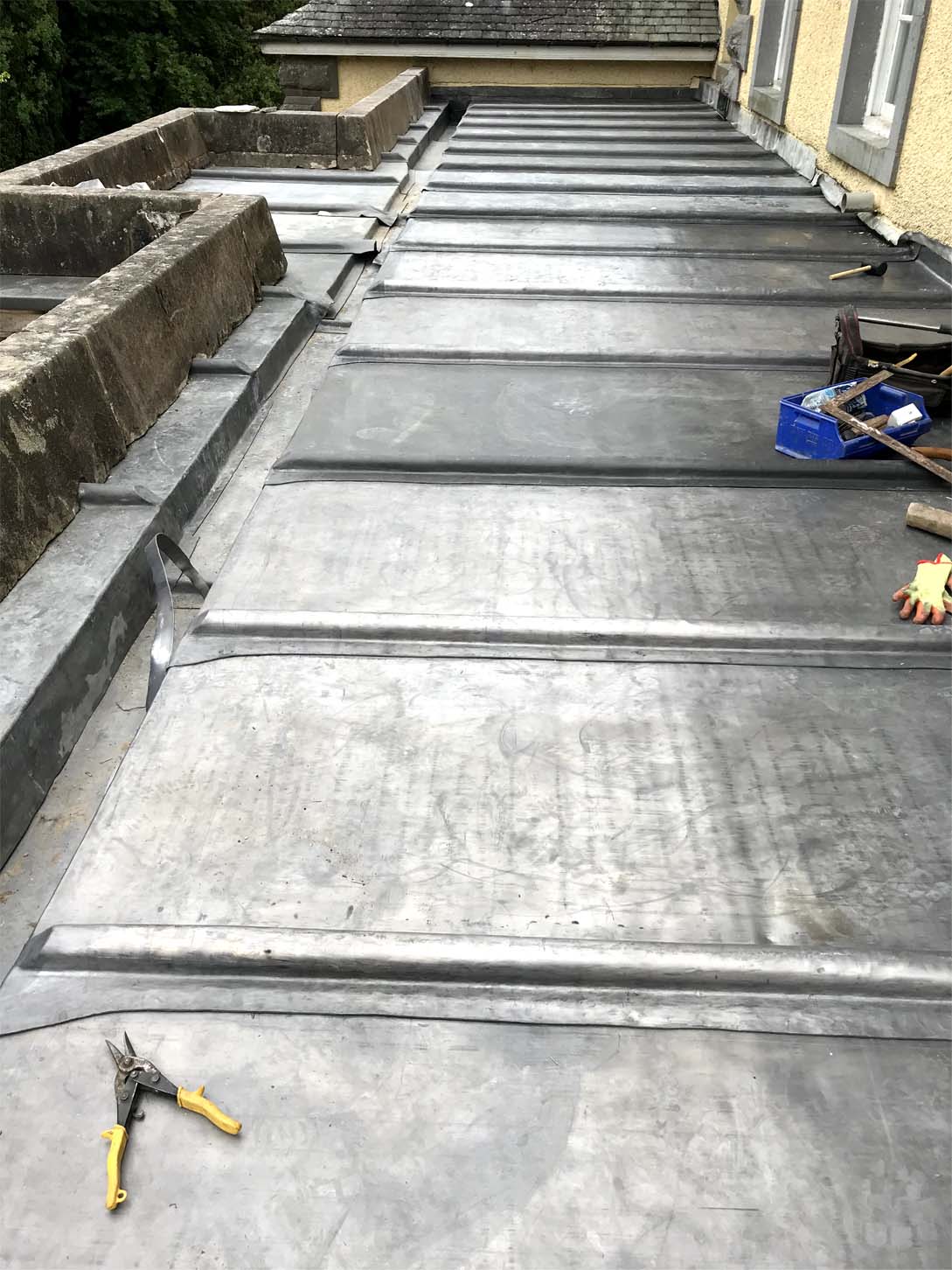
- Flashing repairs and replacement
- Complete installations
- Lead valleys
- Step and cover flashings
We’ll also check the surrounding roof areas during our inspection to make sure the problem isn’t coming from elsewhere.
Most lead repairs are precise jobs rather than large-scale work, and we remove any old flashings and tidy the area before we leave, so disruption stays minimal.
Benefits of properly installed leadwork
Most leaks don’t come through the tiles or slates – they come through the leadwork. Get it right and it’s one of the most reliable parts of the roof.
- Lead is soft enough to be shaped tightly around angles and irregular surfaces – it forms a proper seal where rigid materials can’t
- It weathers and darkens naturally over time, so new work blends in without any treatment needed
- When it does eventually need replacing, we dispose of it responsibly.
- Properly installed flashings rarely need attention from one decade to the next
FAQ’s
Will new leadwork match the existing roof? +
New lead is brighter at first, but it soon weathers and blends in with the surrounding materials.
Why does leadwork sometimes fail prematurely? +
Problems often arise from poor detailing, insufficient allowance for movement, or incorrect fixing. Proper installation makes a big difference to long-term performance.
Does new leadwork need regular maintenance? +
Very little. A visual check every year or two is usually enough to confirm it’s still secure and seated correctly. Well-installed lead can remain watertight for 50 to 100 years – it’s one of the longest-lasting roofing materials available.
Is lead better than alternative flashing materials? +
Lead is durable, flexible and fully recyclable, making it a reliable choice for junctions.

Need roofing advice?
Whether you’ve got a leak, a question, or you’re thinking about a new roof, just get in touch. We’re happy to talk it through and give you a free quotation.